
Your professional headshot is your digital handshake. It’s often the first impression you make on potential clients, employers, and collaborators. Beyond lighting and wardrobe, the pose you strike is a powerful form of nonverbal communication that can instantly convey confidence, approachability, authority, or creativity. In a world of fleeting digital attention, the right pose ensures you communicate the exact message you intend.
This guide moves beyond generic advice to provide a strategic blueprint for mastering the art of professional headshot poses. We'll deconstruct the specific body language that projects your desired personal brand, from the angle of your chin to the placement of your shoulders. You will learn not just how to execute a pose, but why it works and what it communicates to the viewer.
We will break down eight essential poses, providing a clear roadmap for each one. You'll get step-by-step positioning cues, guidance on camera angles, and tips for achieving authentic facial expressions. We will also explore variations tailored to different industries and offer troubleshooting for common issues. This actionable list is designed to help you create a headshot that works as hard as you do, whether you're updating a LinkedIn profile, building a personal brand, or generating images with AI.
1. The Direct Gaze / Over-the-Shoulder Look
The Direct Gaze, often combined with an over-the-shoulder angle, is a cornerstone of professional headshot poses. This classic pose establishes an immediate connection with the viewer, projecting confidence, approachability, and trustworthiness. The subject’s body is angled slightly away from the camera, while their head turns to look directly into the lens. This creates a dynamic line that is visually engaging and flattering for most body types.
This pose is incredibly versatile, making it a go-to for corporate executives, entrepreneurs, real estate agents, and anyone building a personal brand. It strikes the perfect balance between professional authority and personal warmth, making it ideal for LinkedIn profiles, company websites, and speaker bios. The forward-facing gaze signals openness and directness, while the angled body adds a layer of depth and prevents the image from appearing flat or confrontational like a passport photo.
How to Master the Pose
- Positioning: Stand with your feet about shoulder-width apart. Turn your body about 45 degrees away from the camera. Now, turn your head back toward the camera, looking directly into the lens.
- Expression: The key is a genuine, confident expression. Think of connecting with a respected colleague. A soft, authentic smile or a warm, focused look works best. Avoid a forced grin or an intense stare.
- Refinements: Slightly drop your chin to define your jawline and lean your weight onto your back foot. This subtly pushes your front shoulder forward, adding dimension. Ensure your shoulders are relaxed and down, not tensed up toward your ears.
Troubleshooting Common Issues
- Stiff Shoulders: If you look rigid, gently roll your shoulders back and down before settling into the pose.
- "Deer in Headlights" Eyes: To avoid a startled look, try closing your eyes for a moment, thinking of something pleasant, and then slowly opening them just before the photo is taken.
- AI Headshot Prompt Tip: When generating an AI image, use prompts like: "corporate headshot, professional man in a suit, shoulders angled 45 degrees, looking over his shoulder directly at the camera, confident smile, blurred office background." For those seeking advanced AI-driven results, you can explore professional AI headshot solutions that refine these details automatically.
2. The Angled Chin / Jawline Definition Pose
The Angled Chin pose is a powerful technique used by photographers to create a strong, defined jawline and add a sophisticated, dynamic quality to a professional headshot. By turning the head to a slight angle and subtly adjusting the chin, this pose eliminates softness under the chin and sculpts the facial features. It conveys confidence, focus, and a hint of artistic flair, making it an excellent choice for a wide range of professionals.
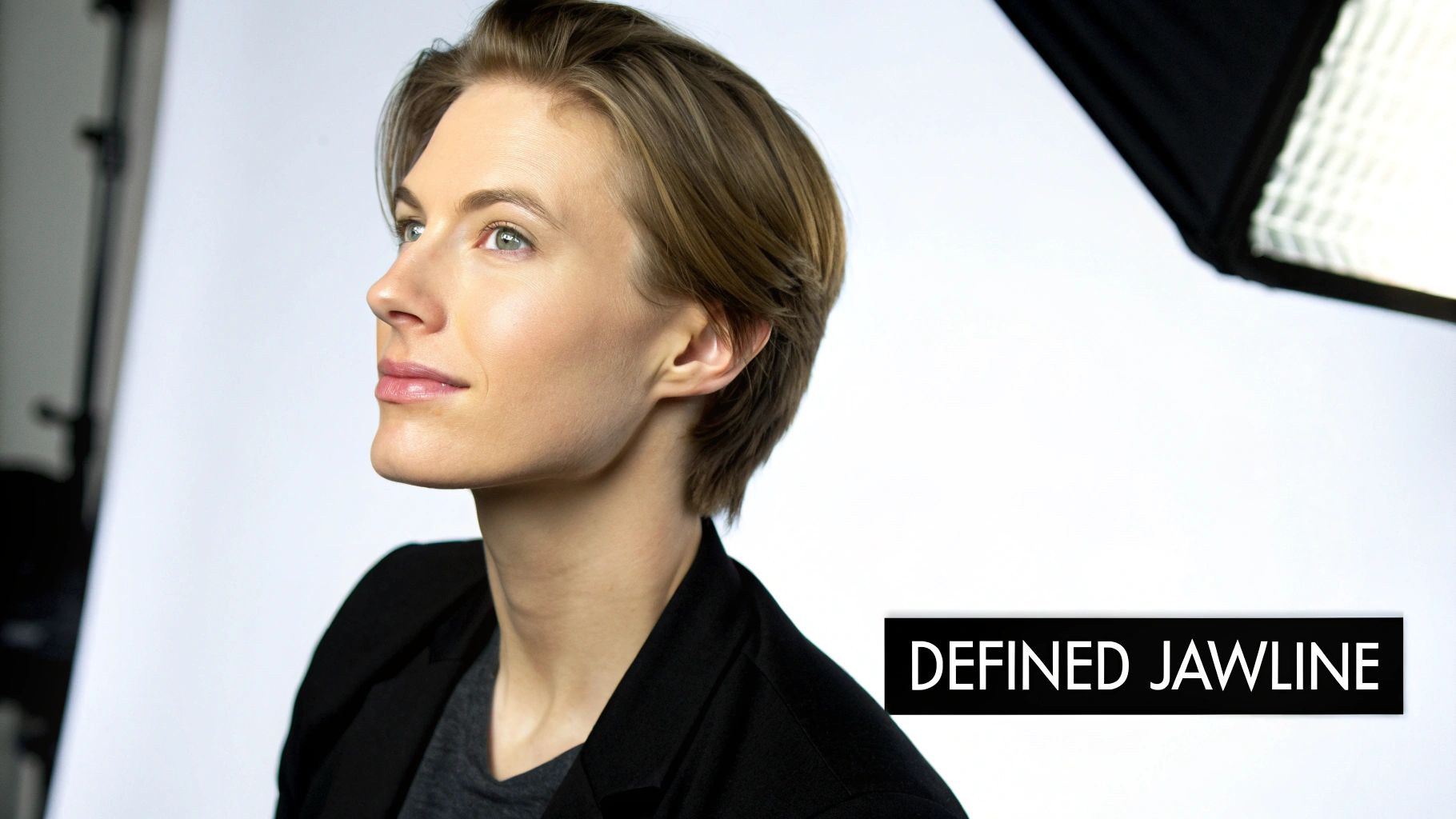
This pose is especially popular among actors, creative professionals, real estate agents, and consultants who want an image that is both polished and compelling. It moves away from a flat, straight-on shot, creating depth and dimension that draws the viewer in. The subtle angling of the head is often interpreted as thoughtful and intentional, projecting an image of a professional who is both strategic and approachable.
How to Master the Pose
- Positioning: Start by facing the camera. Slowly turn your head to about a 30 to 45-degree angle, finding the point where your facial structure is most defined without moving into a full profile.
- Expression: While maintaining the angle, slightly lower your chin. Imagine you are pushing your forehead and chin forward, like a turtle gently extending its neck. This may feel unnatural, but it looks fantastic on camera. Keep your eyes connected with the lens.
- Refinements: A genuine, subtle smile or a focused, neutral expression complements this pose perfectly. Use side lighting to further enhance the shadows and highlights along the jawline, adding to the sculpted effect.
Troubleshooting Common Issues
- "Double Chin" Effect: If lowering your chin creates an unwanted effect, you are likely tucking it in too much. Instead, focus on pushing it forward and down. Practicing in a mirror helps find the perfect spot.
- Lost Connection: If turning your head makes you look disengaged, ensure your eyes rotate fully back to the camera. The power of this pose comes from the dynamic tension between your head's angle and your direct eye contact.
- AI Headshot Prompt Tip: For AI-generated images, try prompts like: "professional headshot of a creative director, head turned 30 degrees from the camera, chin slightly down to define jawline, looking confidently at the camera, soft side lighting, minimalist studio background." To achieve this and other professional headshot poses with precision, you can utilize advanced AI headshot generators that offer detailed control.
3. The Natural Smile / Genuine Expression Pose
Moving beyond the rigid, posed smiles of traditional corporate photography, the Natural Smile or Genuine Expression pose captures an authentic moment of warmth and connection. This approach focuses on eliciting a real smile, often called a "Duchenne smile," which involves both the mouth and the muscles around the eyes. The goal is to create a headshot that feels less like a portrait and more like a snapshot of a positive, real-life interaction, making the subject appear highly approachable and trustworthy.
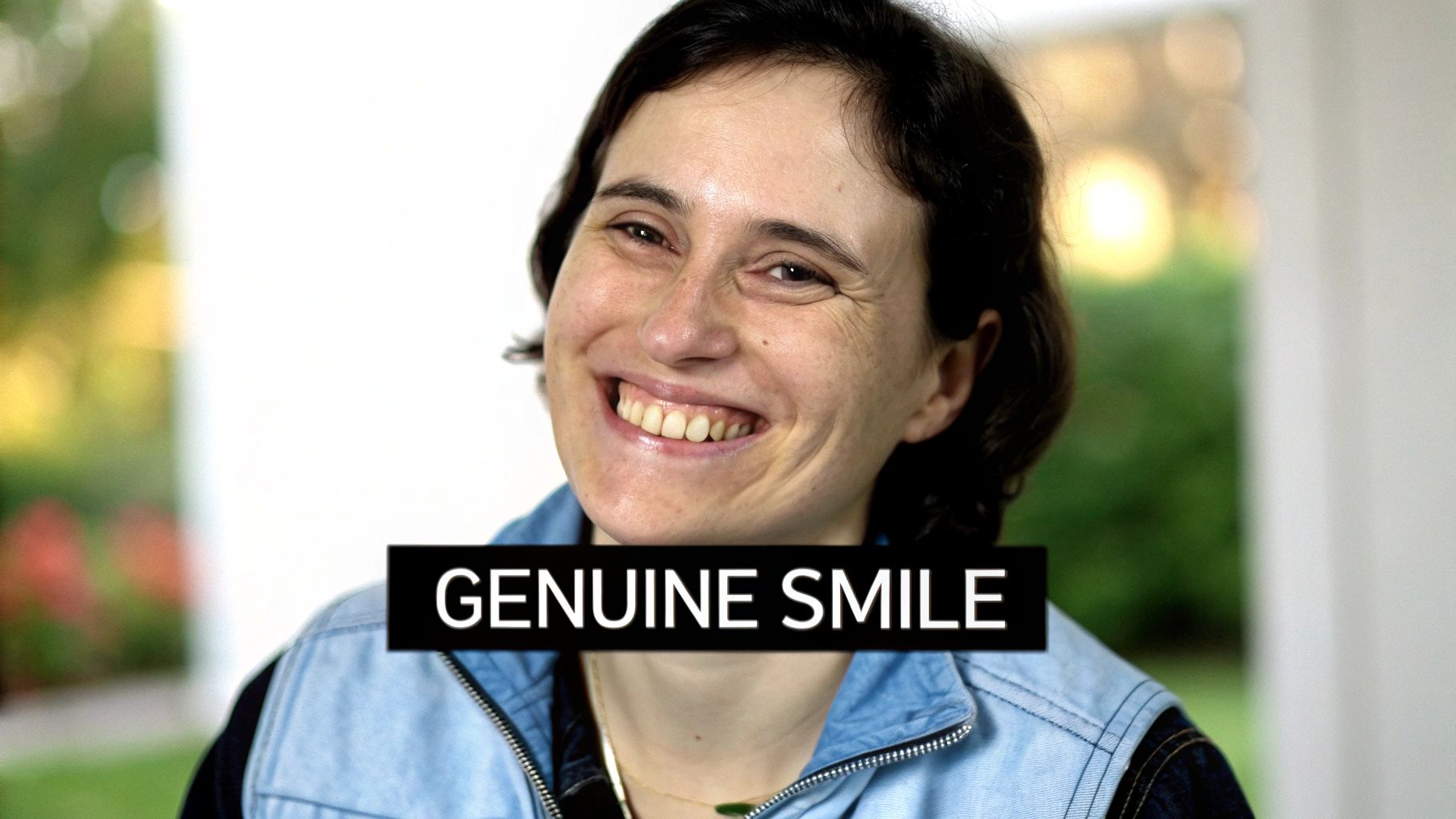
This modern style is perfect for professionals in people-centric fields like healthcare, therapy, sales, and small business ownership. It communicates empathy and sincerity, building an instant rapport with potential clients or patients. In today's business culture, which values authenticity, this pose allows professionals to showcase their personality, making them more relatable and memorable than a stiff, overly formal portrait.
How to Master the Pose
- Mindset Over Mechanics: Instead of thinking "smile," focus on a genuine feeling or memory that makes you happy. Think about a recent success, a loved one, or a funny joke.
- Engage in Conversation: Have the photographer (or a friend) ask you engaging questions or tell you a short, amusing story. The moments of genuine reaction are often the best shots.
- The Squinch: Soften your eyes by slightly squinting your lower eyelids, a technique called "squinching." This helps your eyes look engaged and confident, contributing to a more natural expression.
Troubleshooting Common Issues
- Forced "Cheeeeese" Smile: If your smile feels fake, completely relax your face. Take a deep breath, let your jaw hang loose, and then slowly ease into a smile while thinking of your happy thought.
- Awkwardness: The key is to forget you're being photographed. Focus on the conversation or your thoughts. Ask the photographer to shoot in bursts to capture the fleeting, authentic moments between poses.
- AI Headshot Prompt Tip: For an AI-generated image with this feel, use prompts like: "candid professional headshot, female therapist smiling warmly, soft eye contact, natural laugh lines around eyes, cozy office background, soft lighting." You can experiment with different expressions using a free professional headshot generator to find your perfect look.
4. The Power Pose / Confident Shoulders Back
The Power Pose is a commanding stance that projects confidence, authority, and leadership. Rooted in social psychology research on nonverbal expressions of power, this pose involves standing tall with shoulders pulled back and the chest open. It is an assertive yet professional look that instantly communicates capability and self-assurance, making it one of the most impactful professional headshot poses for those in leadership roles.
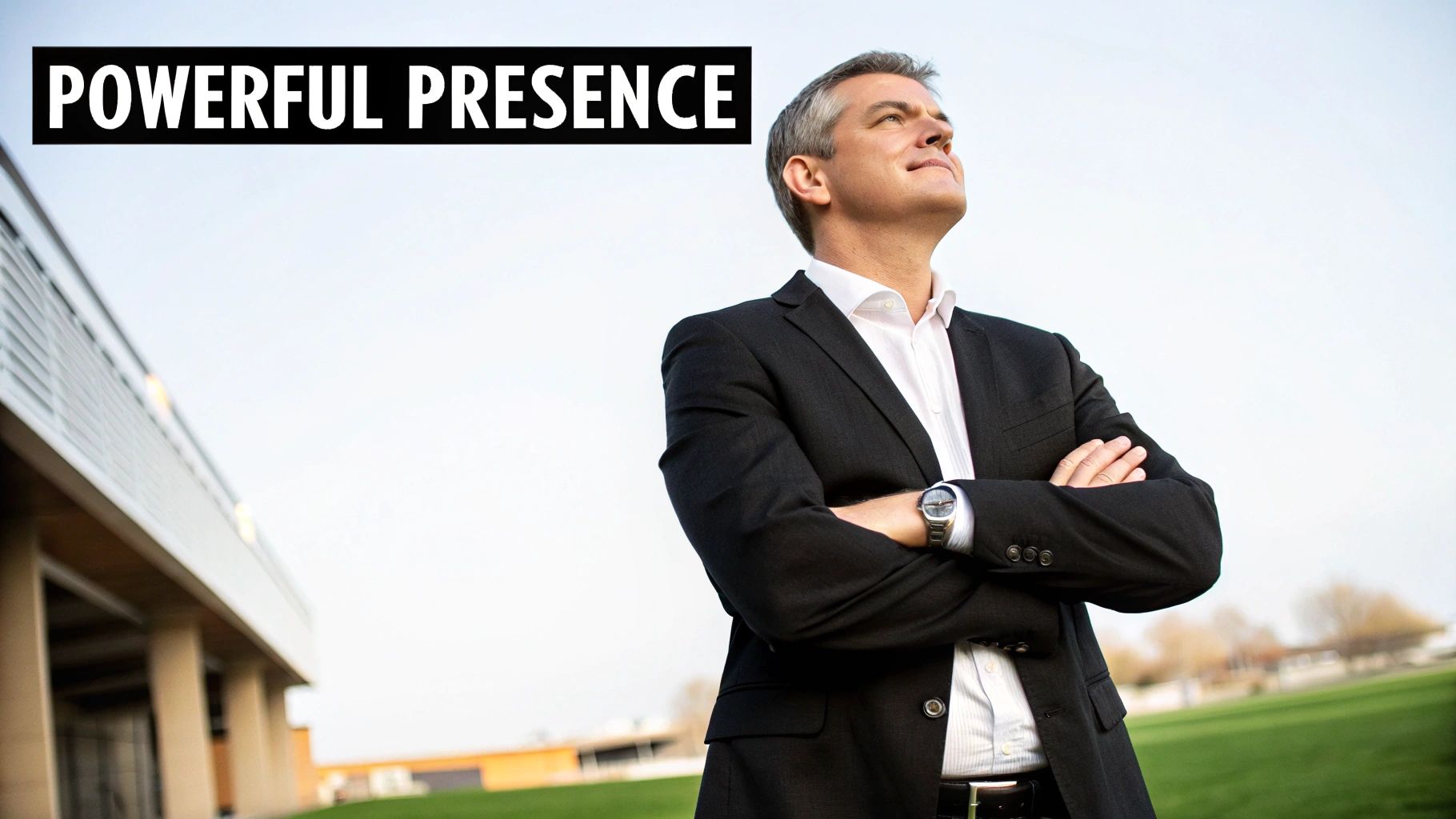
This pose is exceptionally effective for C-suite executives, board members, founders, and political candidates who need to project an image of strength and control. It moves beyond simple approachability to establish a sense of gravitas and vision. The open posture nonverbally signals that you are ready to lead and unafraid of challenges. Beyond the still image, the ability to consciously use and interpret powerful body language for interviews is crucial for making an impact in dynamic professional settings.
How to Master the Pose
- Positioning: Stand with your feet planted firmly, about hip-width apart. Gently roll your shoulders up, back, and then let them settle down. This opens up your chest without creating an unnatural arch in your back.
- Expression: Pair the strong posture with a focused, confident expression. A slight, knowing smile or a direct, determined gaze is more effective than a wide grin, which might soften the pose's impact.
- Refinements: Keep your neck long and your chin level or tilted just slightly upward. This conveys ambition and a forward-looking perspective. Ensure your hands are relaxed at your sides or placed purposefully, perhaps with one hand in a pocket. Avoid crossing your arms, as it can be misinterpreted as defensive.
Troubleshooting Common Issues
- Appearing Stiff or Puffed Up: The goal is confidence, not arrogance. If you look too rigid, take a deep breath and relax your shoulders. The movement should feel natural, not forced like a military stance.
- Unnatural Posture: Avoid arching your lower back to push your chest out. The power comes from the shoulders and upper back. Engage your core to maintain a strong, stable posture.
- AI Headshot Prompt Tip: Use prompts like: "headshot of a female CEO, power pose, standing tall with shoulders back, confident expression, looking directly at the camera, minimalist office background, power suit." To achieve this specific look with professional quality, you can explore powerful AI-generated headshots that nail the nuances of executive presence.
5. The Three-Quarter View / Subtle Turn
The Three-Quarter View is one of the most universally flattering and widely used professional headshot poses. It involves turning the body and head slightly away from the camera, typically at a 30 to 45-degree angle, while maintaining direct eye contact with the lens. This classic angle adds depth and dimension to the face, highlighting the cheekbones and defining the jawline in a way that a direct, front-facing shot cannot.
This pose is the gold standard for a reason. It is favored by corporate leaders, academics, lawyers, and consultants who need a portrait that conveys both professionalism and approachability. The subtle turn creates a more dynamic and engaging composition than a flat, passport-style photo, making the subject appear more three-dimensional and natural. It strikes a perfect balance, offering a clear view of the subject's features while using shadow and light to create a pleasing, sculpted look.
How to Master the Pose
- Positioning: Stand with your body angled about 45 degrees away from the camera. Then, turn your head back toward the camera until you can comfortably see the lens with both eyes. Your face should be at a three-quarter turn, not a full profile.
- Expression: A confident yet relaxed expression is key. A gentle, closed-mouth smile or a soft, engaging look communicates warmth and sincerity. The goal is to connect with the viewer through your eyes, projecting competence and trustworthiness.
- Refinements: Ensure both of your eyes are clearly visible. Keep your chin level or slightly down. To create a stronger composition, position the eye nearest to the camera slightly closer to the vertical center of the frame. Relax your shoulders and lean slightly forward from your hips to add energy to the pose.
Troubleshooting Common Issues
- Losing an Eye: If you turn your head too far, one eye might become obscured. Turn back toward the camera slightly until both eyes are in full view.
- Looking Awkward: If the pose feels unnatural, try looking away and then turning your head back to the camera as if someone just called your name. This can produce a more authentic expression.
- AI Headshot Prompt Tip: For generating this pose with AI, use descriptive prompts like: "professional headshot of a female academic, three-quarter view, head turned slightly to the side but looking at the camera, soft smile, blurred library background, studio lighting." You can leverage professional AI headshot tools that master these nuanced angles for optimal results.
6. The Shoulder Lean / Approachable Professional
The Shoulder Lean, also known as the Approachable Professional pose, is a subtle yet powerful way to convey warmth, engagement, and active listening. In this pose, the subject leans slightly forward from their torso or tilts their head toward the camera, breaking the rigid vertical plane. This simple forward movement creates an inviting and dynamic feel, suggesting a willingness to connect and collaborate.
This pose is incredibly effective for professionals in client-facing roles where building trust and rapport is paramount. Think therapists, coaches, financial advisors, and sales consultants. By physically leaning in, the subject non-verbally communicates interest and openness. It transforms a standard portrait into a more personal interaction, making the viewer feel seen and valued. It’s a modern alternative to more traditional, stoic professional headshot poses.
How to Master the Pose
- Positioning: Sit or stand with a straight but relaxed spine. From the shoulders or upper torso, lean gently forward toward the camera, just 2-4 inches. Alternatively, or in combination, tilt your head slightly (about 15-20 degrees) toward the camera.
- Expression: A genuine, warm smile is crucial. The eyes should be soft and engaging, as if you are actively listening to a respected client or colleague. This enhances the overall feeling of approachability.
- Refinements: Keep your chin slightly down to accentuate your jawline. Ensure your shoulders remain relaxed and don’t hunch as you lean forward. The movement should feel natural, not forced.
Troubleshooting Common Issues
- Looks like Hunching: If the lean looks like poor posture, focus on initiating the movement from your upper back and shoulders while keeping your lower back straight. Think of it as bringing your heart closer to the camera.
- Forced Expression: To achieve a natural, warm look, think about a positive client interaction or a moment of professional satisfaction right before the shot is taken.
- AI Headshot Prompt Tip: For AI generation, try prompts like: "Headshot of a friendly female financial advisor, leaning slightly forward toward the camera, warm smile, soft eyes, three-quarter angle, bright and modern office background." For those seeking advanced AI-driven results, you can explore professional AI headshot solutions that refine these details automatically.
7. The Subtle Head Tilt / Likability Angle
The Subtle Head Tilt, also known as the Likability Angle, is a simple yet powerful technique in the world of professional headshot poses. By tilting your head just slightly (around 15-25 degrees) toward one shoulder, you can significantly alter the perception of the image. This pose breaks the static, straight-on symmetry, conveying engagement, attentiveness, and a high degree of approachability.
This pose is particularly effective for professionals in people-centric roles such as human resources, customer relations, healthcare, and consulting. Research in psychology suggests that a slight head tilt is a universal non-verbal cue of curiosity and openness, which helps build an instant rapport with the viewer. It softens the overall image, making the subject appear more friendly and less intimidating, which is invaluable for profiles on company websites or professional networking platforms.
How to Master the Pose
- Positioning: Stand or sit facing the camera, either directly on or at a slight three-quarter angle. Keep your shoulders level and relaxed.
- The Tilt: Slowly and gently tilt your head toward one of your shoulders. The movement should be subtle and natural, not a dramatic bend. Find an angle that feels comfortable, typically between 15 and 25 degrees.
- Expression: Combine the tilt with a genuine, warm smile. Think about listening to a good friend or receiving positive news. This pairing amplifies the feeling of warmth and connection.
Troubleshooting Common Issues
- Over-Tilted Head: A tilt that is too extreme can look unnatural or confusing. Practice in a mirror to find your ideal, subtle angle.
- Uneven Shoulders: It’s common to raise the shoulder on the side you're tilting toward. Consciously keep both shoulders relaxed and down to maintain a poised and professional posture.
- AI Headshot Prompt Tip: For AI generation, use prompts like: "professional headshot of a female marketing manager, subtle head tilt to the right, warm and engaging smile, looking directly at camera, soft studio lighting, blurred office background." For those seeking advanced AI-driven results, you can explore professional AI headshot solutions that refine these details automatically.
8. The Confident Gaze / Eyes to Camera with Slight Intensity
The Confident Gaze is a powerful entry in the catalog of professional headshot poses, characterized by direct, unwavering eye contact and a composed, neutral expression. This pose deliberately steps away from the warm, broad smile to project authority, intellect, and profound self-assurance. It conveys a message of competence and focused determination, making it an excellent choice for professions where gravitas and expertise are paramount.
This pose is particularly effective for academics, legal professionals, engineers, and financial analysts. It communicates that the subject is serious, knowledgeable, and a leader in their field. The intensity is not one of aggression but of deep concentration and confidence. It’s the perfect look for an author’s bio on a research paper, a law firm's website, or a C-suite executive's portrait in an annual report, establishing credibility at a single glance.
How to Master the Pose
- Positioning: Face the camera directly or with a very slight body angle. Keep your posture upright and your shoulders squared but relaxed to project stability and confidence.
- Expression: The key is in the eyes. Maintain strong, steady eye contact with the lens. Keep your mouth neutral or with the faintest hint of a closed-lip smile to avoid looking stern. Think about conveying quiet confidence and expertise.
- Refinements: A slight head tilt can add a touch of inquisitiveness, while keeping the chin level or slightly down maintains a sense of authority. Ensure your facial muscles, especially around the brow and jaw, are relaxed to prevent any unintended tension or scowling.
Troubleshooting Common Issues
- Looking Angry or Unapproachable: If the expression feels too harsh, think of a moment of professional accomplishment. This will soften your eyes and bring a subtle, confident lift to your features without breaking into a full smile.
- Blank Stare: To avoid a vacant look, engage mentally with the camera. Imagine you are having a serious, respectful conversation with a peer or explaining a complex topic you are passionate about. This brings life and focus to your eyes.
- AI Headshot Prompt Tip: For generating an AI equivalent, use prompts like: "professional headshot, female architect in a modern office, looking directly at the camera with a confident and serious expression, neutral mouth, sharp focus on eyes, soft studio lighting." To ensure your results have this specific professional polish, you can explore specialized AI headshot services that master these nuanced expressions.
8-Point Professional Headshot Pose Comparison
| Pose | Implementation Complexity 🔄 | Resource Requirements ⚡ | Expected Outcomes ⭐📊 | Ideal Use Cases | Key Advantages 💡 |
|---|---|---|---|---|---|
| The Direct Gaze / Over-the-Shoulder Look | Low — simple to stage | Standard lighting, minimal direction | ⭐⭐⭐ Trust-building, versatile professional impact 📊 | LinkedIn, corporate headshots, executive bios | Builds trust; timeless and broadly applicable |
| The Angled Chin / Jawline Definition Pose | Medium — precise angle needed | Side/three‑point lighting, skilled guidance | ⭐⭐⭐ More sculpted appearance; reduces double chin 📊 | Actors, on‑camera pros, fashion, real estate | Enhances jawline; adds dynamic composition |
| The Natural Smile / Genuine Expression Pose | High — needs authentic emotion | Time, director skill, continuous bursts | ⭐⭐⭐ Highly approachable and memorable 📊 | Healthcare, therapists, service businesses, startups | Conveys authenticity; strong emotional connection |
| The Power Pose / Confident Shoulders Back | Medium — risk of appearing stiff/overdone | Good lighting, confident subject, coaching | ⭐⭐⭐ Projects leadership and authority 📊 | CEOs, board members, political candidates, founders | Commands presence; signals competence and strength |
| The Three‑Quarter View / Subtle Turn | Low–Medium — common flattering angle | Basic lighting, careful positioning | ⭐⭐⭐ Flattering, dimensional, reliable professional look 📊 | Universal headshots, academics, legal, corporate | Universally flattering; maintains eye contact and depth |
| The Shoulder Lean / Approachable Professional | Low–Medium — balance required to avoid hunching | Minimal gear, posture direction | ⭐⭐⭐ Warm, engaged, client‑friendly impression 📊 | Coaches, consultants, sales, customer‑facing roles | Conveys approachability and active engagement |
| The Subtle Head Tilt / Likability Angle | Low — subtle and precise (15–25°) | Minimal; practice in mirror | ⭐⭐⭐ Increases perceived likability and receptiveness 📊 | HR, recruitment, customer relations, marketing | Boosts friendliness while staying professional |
| The Confident Gaze / Eyes to Camera with Slight Intensity | Medium — controlled expression required | Good lighting, subject confidence | ⭐⭐⭐ Conveys competence and expertise; memorable 📊 | Technical roles, academics, legal, finance, architects | Projects quiet confidence and authority without a smile |
Bringing It All Together: From Posing to Perfect Headshot
Navigating the world of professional headshots can feel complex, but as we've explored, mastering a few key poses is the secret to capturing a truly impactful image. This guide has broken down eight essential professional headshot poses, from the direct and engaging Confident Gaze to the approachable Shoulder Lean, providing a versatile toolkit for any professional context. The true power lies not in simply memorizing these positions, but in understanding the subtle messages they convey.
Your choice of pose is a strategic decision that shapes your personal brand's narrative. An entrepreneur seeking venture capital might leverage the Power Pose to project authority and confidence, while a consultant aiming to build client trust could opt for the Natural Smile combined with a Subtle Head Tilt to appear more relatable and open. The goal is to move beyond a static, generic photo and create a dynamic portrait that communicates your unique professional identity, whether you're in a creative field, a corporate environment, or the tech industry.
Key Takeaways for Your Next Headshot Session
To truly excel, focus on the details that elevate a good pose to a great one. Remember the core principles we've discussed:
- Posture is paramount: A straight spine, relaxed yet squared shoulders, and a slightly extended neck create a confident and poised foundation for any pose.
- Angles create definition: Turning your body slightly away from the camera (the Three-Quarter View) is almost universally flattering, as it adds dimension and slims your frame. Similarly, angling your chin slightly down and forward helps define the jawline.
- Authenticity connects: A forced smile is easy to spot. The most effective expressions are genuine. Think of a happy memory, a recent success, or someone you care about to evoke a natural, engaging look that resonates with the viewer.
Integrating Your Headshot into Your Professional Brand
Once you have your perfect headshot, its journey has just begun. This image becomes a cornerstone of your digital presence, representing you on platforms where first impressions are critical. It’s the visual handshake that precedes any interaction. To ensure your new photo works as hard as you do, it's crucial to place it within a fully developed professional profile. After you've chosen the headshot that best represents your brand, take the next step and learn how to optimize your LinkedIn profile, ensuring your new image is supported by compelling, well-crafted content that drives career success.
Ultimately, mastering these professional headshot poses empowers you to take control of how you are perceived. Practice these techniques in the mirror to see what feels most natural. By understanding the nuances of body language and expression, you can step in front of any camera, or into any AI photo generation process, with the confidence needed to capture the perfect, career-defining shot.
Ready to create a stunning variety of professional headshots without the time and expense of a traditional photoshoot? Photo AI Studio allows you to generate hundreds of high-quality headshots in various poses, outfits, and backgrounds from a single set of your photos. Take control of your professional image and experiment with all the poses discussed here by visiting Photo AI Studio today.