
Deciding what to wear for a professional headshot doesn't have to be complicated. The best approach is to stick with solid, rich colors and timeless styles that feel right for both your industry and your personal brand. Think of your clothing as a supporting character—it should enhance your presence, not steal the show. The real focus should always be on you.
Your Headshot Is Your Digital Handshake
Long before you meet someone in person, your professional headshot has already introduced you. It’s your digital handshake, and in today's visual world, getting it right is more important than ever. The goal is simple: pick an outfit that makes you look and feel confident, competent, and approachable. A great headshot should work for you for years to come.
This emphasis on a strong visual identity is a major shift we're seeing across all industries. In fact, the global AI headshot market is expected to hit $500 million by 2025, which is a massive 150% jump from 2024. As reported by Headsnap.io, this isn't just a trend; it's a reflection of how critical a polished, professional image has become.
The Do's and Don'ts of Headshot Attire
To help you nail your look, let's break down the core principles of what to wear (and what to leave in the closet). Getting these basics right is the first step toward creating impactful and effective professional headshots.
Think of your headshot outfit as the rhythm section in a band—it’s the drums and bass. It provides a solid foundation that lets your personality and professionalism take center stage. You are the lead singer.
Here’s a quick reference table to make your outfit decisions even easier.
Quick Guide to Professional Headshot Outfits
This table summarizes the key dos and don'ts for putting together the perfect headshot look.
| Attire Element | Best Practices (Do) | What to Avoid (Don't) |
|---|---|---|
| Colors | Wear solid, rich, or medium-to-dark jewel tones (e.g., navy, emerald, maroon) that complement your skin tone. | Avoid neons, bright whites, and busy patterns that distract the viewer's eye. |
| Patterns | Opt for solid colors or very subtle textures (e.g., a woven fabric) to add depth without competing for attention. | Steer clear of tight stripes, small checks, or bold graphics that can create distracting visual effects on camera. |
| Fit & Style | Choose classic, well-fitting clothes that make you feel confident and comfortable. A tailored blazer or structured top is excellent. | Don't wear anything too trendy, baggy, or revealing. Avoid wrinkled fabrics and clothing with large logos. |
| Accessories | Select simple, timeless pieces like a classic watch, stud earrings, or a delicate necklace that adds a touch of personality. | Avoid overly large, shiny, or noisy jewelry that can pull focus away from your face. |
Ultimately, these guidelines are here to help you make choices that let your confidence shine through without any visual distractions.
Choosing Colors That Enhance Your Professional Brand
Color is a powerful, silent communicator. The shades you pick for your headshot do more than just look nice—they send instant, subconscious messages about who you are as a professional. Think of your color choice as a tool for shaping perception; the right hue can immediately signal confidence, creativity, or authority.
The psychology here is pretty straightforward and incredibly useful. For example, shades of blue are almost universally seen as trustworthy and stable, which is why navy is such a timeless, can't-go-wrong choice for anyone in corporate or finance. On the other hand, rich jewel tones like emerald green or deep sapphire can project sophistication and a creative edge.
Aligning Color With Your Personal Brand
Your color choice needs to be deliberate. A muted grey might feel like a safe bet, but a deep maroon can speak to your passion and drive. The goal is to pick colors that not only flatter you physically but also feel right for your industry and the personal brand you're trying to cultivate.
Your outfit's color palette sets the emotional tone for your headshot. It’s the first thing a viewer’s brain processes, creating an immediate impression before they even register your expression. A strategic color choice ensures that the first impression is the right one.
This is where the core principles of a great headshot outfit come into play. Your look should be a blend of timeless, professional, and authentic—and color is the thread that ties it all together.
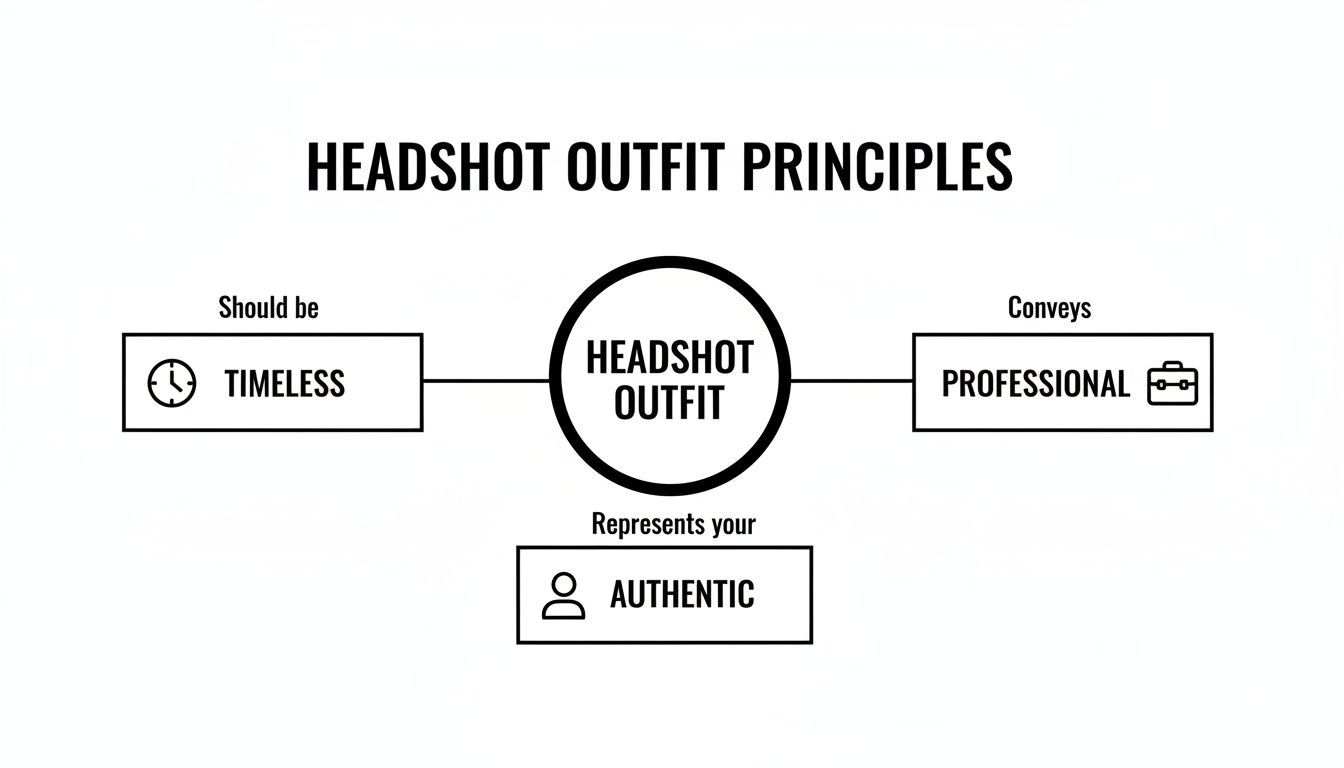
As you can see, a successful headshot outfit hinges on balancing these three elements, and your color choices are a huge part of that equation.
Finding Hues That Make You Shine
Beyond just brand alignment, the best colors are the ones that simply make you look fantastic. We're talking vibrant, healthy, and awake. The right palette will make your eyes pop, give your skin a bright, clear appearance, and make your hair color look richer. The wrong color, however, can clash with your skin's undertones and leave you looking tired or washed out.
Here’s a quick and easy way to figure out what works for you:
- Cool Undertones: If your skin has subtle pink or blueish undertones, you’ll look amazing in blues, purples, and most greens. Silver jewelry is usually your best friend.
- Warm Undertones: If you have more golden or peachy undertones, earthy shades like olive, terracotta, mustard, and coral will be incredibly flattering. Gold jewelry is probably your go-to.
- Neutral Undertones: Have a mix of both? Lucky you—most colors will look great on you.
Don't be afraid to experiment. The best way to know for sure is to hold different colored fabrics up to your face in good, natural light and see what happens. Notice which ones bring your features to life. Sometimes, a simple swap from a standard black to a deep charcoal grey or a rich navy blue adds a layer of depth that elevates the entire photo, making you look polished, engaged, and ready for whatever's next.
Getting Solids, Patterns, and Textures Right on Camera
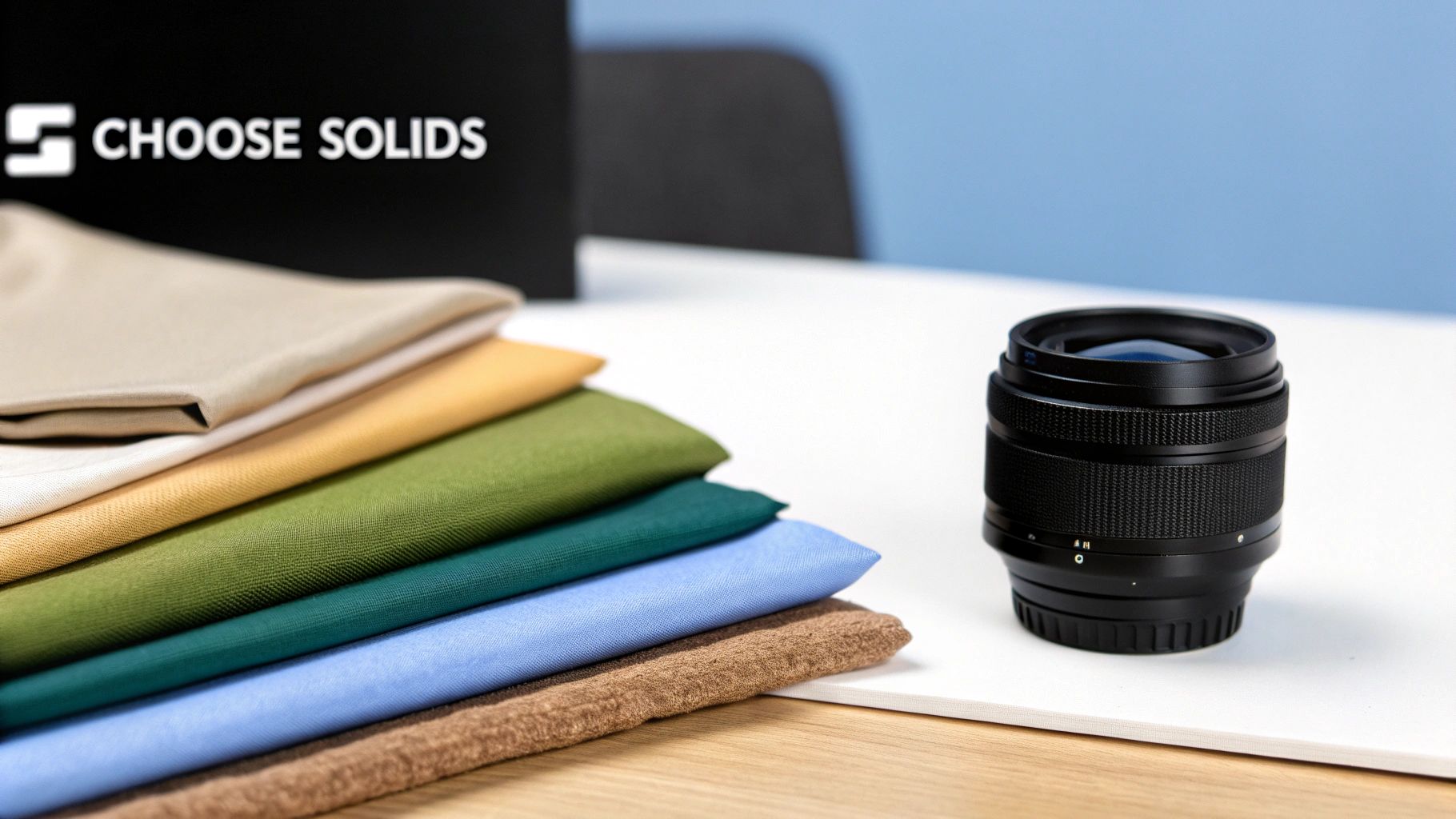
You know that favorite shirt that always gets compliments? It might look amazing in person, but it can turn into a visual nightmare on camera. When you're picking out what to wear for a headshot, think of your clothes as the supporting cast. They're there to make the star—you—look good, not to steal the show. This is precisely why solid colors are the gold standard for headshot outfits.
Solid-colored clothing provides a clean, simple backdrop that keeps the attention right where you want it: on your face and your expression. Our eyes are naturally drawn to bright colors and busy patterns. If your shirt is screaming louder than your smile, it’s not helping your cause. A classic navy blue, a rich forest green, or even a warm burgundy lets your personality come through without any distractions.
Why Patterns Can Be Problematic
That patterned shirt you love might be a core part of your style, but it can create some serious issues in a professional photo. Certain designs just don't play well with digital cameras.
Think of your outfit as the rhythm section in a band—it should provide a steady, supportive beat. Solids do that perfectly, letting your professional presence be the lead singer.
High-contrast, tight patterns like tiny checks, thin pinstripes, or herringbone can cause a strange visual glitch called a moiré effect. This is what happens when a repeating pattern clashes with the pixel grid of the camera's sensor. The result is a bizarre, wavy distortion that’s impossible for viewers to ignore and a real headache to fix in post-production.
To play it safe, it's best to avoid these:
- Tight stripes or small checks: These are the biggest offenders when it comes to the moiré effect.
- Bold, high-contrast graphics: Big logos or loud prints will pull the viewer's eyes away from your face every single time.
- Complex geometric designs: Anything too busy just makes the final image feel cluttered and unprofessional.
The Secret Weapon: Subtle Texture
This doesn’t mean your outfit has to be boring or made of completely flat fabric. The trick is to bring in visual interest with texture, not pattern. A subtle texture adds a touch of depth and sophistication to what you're wearing without creating any distracting visual noise. It just makes the whole look feel more polished and intentional.
Think about materials like a quality knit sweater, a textured woven shirt, or a tweed blazer. These fabrics catch the light beautifully, adding dimension to the photograph without being overwhelming. It’s a simple strategy that gives your headshot a refined, high-end feel while making sure you remain the clear, confident center of attention.
Dressing for Your Industry and Career Goals
What you wear in your headshot is so much more than just clothes—it's your professional handshake in a single frame. A corporate lawyer needs to project a different kind of authority than a freelance graphic designer, and your outfit is the first clue people get about who you are professionally. Think of it as the visual cover letter for your resume; it needs to line up with your industry's norms while subtly nodding to where you want to go in your career.
Of course, a great headshot is just one piece of the puzzle. Just as your outfit speaks to your professional goals, a sharp resume is essential. You can explore effective student resume templates to make sure your entire professional package is cohesive and powerful. When your visual brand and your documented experience tell the same story, you make an unforgettable first impression.
We're also seeing a big shift in what a "professional" headshot even looks like. The stiff, overly formal portraits of the past are making way for more authentic, approachable images. It's a trend that's all about aligning your photo with your personal brand. You’re not just a job title; you're a professional with a unique story, and your headshot should reflect that consistently everywhere, from your LinkedIn profile to your company's website.
Corporate and Legal Professionals
If you work in a traditional field like finance, law, or high-level consulting, the unspoken dress code is pretty clear. Your goal is to radiate authority, trustworthiness, and polished professionalism. A well-tailored suit or a sharp, structured blazer isn't just a suggestion; it’s part of the uniform.
- For Men: You can't go wrong with a classic dark suit in navy or charcoal, paired with a crisp, light-colored dress shirt. If you wear a tie, keep it conservative with a subtle pattern—let the quality of the suit do the talking.
- For Women: A tailored blazer over a simple shell top or a high-quality blouse is a winning combination. A classic, structured dress layered with a jacket is another excellent, powerful choice.
The secret weapon here is the fit. An impeccably tailored garment telegraphs an incredible attention to detail, which is a highly respected trait in these industries. For more specific examples, check out our guide on headshot outfits for lawyers.
Tech Startups and Modern Businesses
The tech world and most modern companies operate on a "smart casual" frequency. Here, the goal is to look innovative, approachable, and smart, but without the stiff formality that can make you seem out of touch. In a fast-moving industry, "stuffy" can easily be misinterpreted as "outdated."
Instead of reaching for a full suit, think along these lines:
- A high-quality sweater layered over a collared shirt.
- A crisp button-down shirt on its own—no tie necessary.
- A smart blazer paired with a clean, solid-colored t-shirt.
This approach hits the sweet spot, showing you're a serious professional who also knows how to be a collaborative and modern team player.
Creatives and Entrepreneurs
For anyone in a creative field—artists, designers, founders—your headshot is a prime opportunity to let your personal brand shine. You absolutely still need to look polished, but you have way more freedom to play with color, texture, and individual style.
Your headshot is your personal logo. For creatives, this means your outfit should be an authentic reflection of your creative vision—professional, yes, but never generic. It should tell a story about your unique point of view.
Think about a stylish blouse with a unique neckline, a pop of a vibrant (but tasteful) color, or a jacket made from an interesting fabric. The aim is to look intentional and put-together, not like you're trying too hard to be different. Your clothes should feel like a genuine extension of you and the work you create.
Perfecting Your Look with Grooming and Accessories
You’ve picked out the perfect outfit, but the job isn’t done just yet. It’s the small details—the finishing touches from grooming and accessories—that truly pull a look together and elevate a good headshot into a great one. This is where you signal that you’re polished, professional, and ready for business.
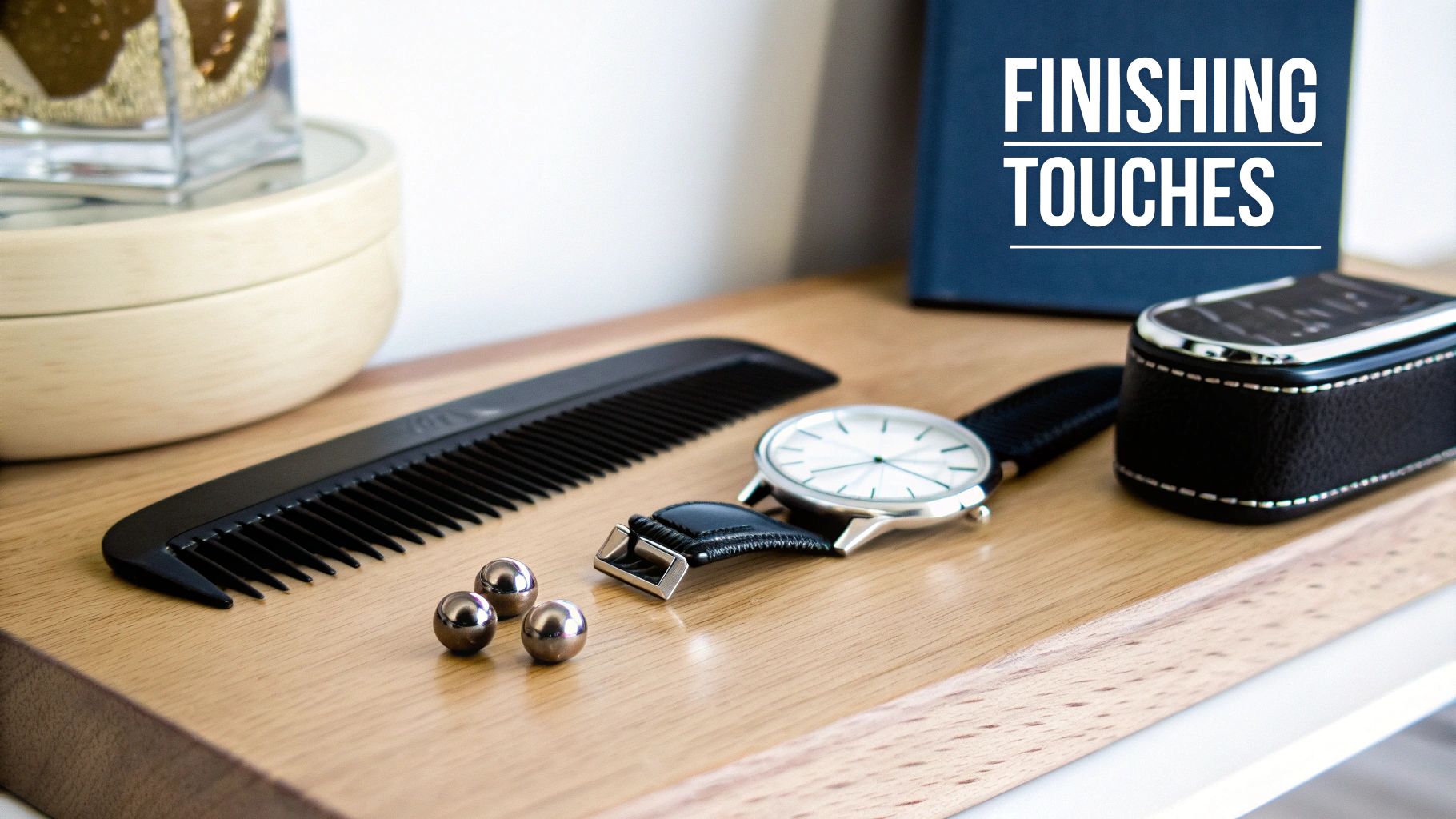
Think of your accessories as the final, subtle brushstrokes on a painting. They shouldn't scream for attention. Instead, they should whisper "sophistication." A classic watch, a simple pair of stud earrings, or a delicate necklace can add just the right amount of polish without distracting from the most important part of the photo: you. Steer clear of anything too bold, flashy, or trendy, as it can instantly date your headshot and draw the viewer's eye away from your face.
If you're looking for ideas on how to strike that perfect balance, exploring some stylish business casual jewelry for work can provide some great inspiration for pieces that enhance rather than overpower.
Polished Grooming for a Camera-Ready Look
Grooming isn't just an afterthought; it's a fundamental part of your presentation. For a headshot, the goal is to look like you on your best day—put-together, confident, and detail-oriented.
Your approach to grooming sends a powerful message. It shows you care about your professional presentation and respect the opportunity to make a great first impression.
A little prep work before your photoshoot can make a world of difference in the final image. Here are a few things everyone should pay attention to:
- Hair: Style your hair the way you would for a big presentation or an important client meeting. It should look neat and intentional. A word of caution: photo day is not the time to experiment with a drastic new haircut or a bold color change!
- Makeup: The camera loves a natural, enhanced look. Professional lighting can wash out your features, so applying slightly more definition than you might for a normal workday is a good idea. Just be careful not to overdo it—avoid heavy, glamorous makeup that doesn't feel like your authentic professional self.
- Skin: Healthy, hydrated skin looks fantastic on camera. Make sure your skin is well-moisturized on the day of the shoot and don't forget lip balm to avoid chapped lips. This simple step helps you look fresh and lets your natural confidence shine.
Experiment with Outfits Using AI Headshot Generators
Trying to nail down the perfect look for your professional headshots can be a real headache. We’ve all been there—staring into a closet full of clothes, wondering if a certain color will wash you out on camera or if that neckline is really the most flattering choice. Thankfully, you can now skip all that guesswork and experiment with your look, completely risk-free.
Instead of locking yourself into a single outfit for a traditional photoshoot, AI headshot generators let you visualize dozens of styles in minutes. Think of it as a digital "try-on" session. You get to see exactly how different outfits, from a sharp business suit to a smart-casual blazer, will look in a final, polished photo. It’s the perfect way to test how certain colors pop against your skin tone or how different collars frame your face, all from your desk.
See Your Style Before Committing
This whole approach takes the anxiety out of answering the "what to wear" question. It's like having a virtual fitting room that helps you feel completely confident in your final decision. For example, you could generate one headshot wearing a classic navy blazer and another with a bold, jewel-toned top to see which one truly captures your personal brand.
This screenshot from Photo AI Studio shows just how powerful this can be, generating a wide range of professional looks from just a handful of your own photos.
The real magic here is the incredible variety and quality you get. You can build a whole portfolio of headshots that fit any situation you can think of, whether it's for the company website or your creative portfolio.
This isn’t just about convenience—it’s also incredibly budget-friendly. A traditional photoshoot can set you back a good amount. With the average cost for a single professional session in 2025 starting at $283, and prices varying wildly from there, trying to capture multiple looks can get expensive, fast.
AI headshot generators transform outfit selection from a game of chance into a strategic process. You're no longer guessing what might look good on camera; you're actively curating a library of professional images tailored to every possible need.
At the end of the day, using a free professional headshot generator gives you the power to build a diverse collection of images. You can have a serious, formal option for LinkedIn, a more approachable style for your personal blog, and something creative for industry events—all without the time commitment and cost of multiple photoshoots. It ensures you always have the perfect, on-brand image ready to go.
Got Questions? Let's Talk Headshot Attire
Even after you've narrowed down your choices, a few nagging questions always seem to pop up. Deciding what to wear for a professional headshot feels like a high-stakes choice, and for good reason! So, let's clear up some of the most common uncertainties to help you walk into your session (or start generating images) with total confidence.
Getting these details right means your final look is polished and intentional, with no room for second-guessing.
To Wear Glasses or Not to Wear Glasses?
This one’s simple: if you wear glasses daily, you should absolutely wear them in your headshot. Your photo needs to look like you—the you that colleagues and clients will meet in person. Your glasses are a part of your professional identity.
Just keep a few things in mind to make sure they look fantastic on camera:
- Give the lenses a thorough cleaning right before the shoot. Smudges are surprisingly distracting.
- If you're working with a photographer, they'll know how to adjust the lighting to kill any glare.
- When using an AI generator, double-check the final images to ensure the AI hasn't created odd reflections that hide your eyes.
Are Sleeveless Tops a Good Idea?
Honestly, it’s usually best to stick with sleeves. Sleeveless tops can sometimes pull the viewer's focus down to your shoulders and arms, taking attention away from your face—which is the whole point of the photo.
Even a small cap sleeve adds a bit more structure than a tank top. A blazer, a sharp cardigan, or a structured jacket is also a great way to layer over a sleeveless piece, adding a professional touch that frames your face perfectly.
Remember, a headshot is a tight crop. Every detail near your face becomes more significant. Sleeves create a clean, framing effect that naturally guides the eye right back to your expression.
How Many Outfits Should I Have Ready?
For a classic photoshoot, bringing two to three complete outfits is the gold standard. It gives you options. You can capture a more formal look and something a bit more business-casual, which means you get more versatile photos from a single session.
But with AI, the rules change completely. An AI headshot generator doesn't care about changing rooms or session times. You can create dozens of headshots with entirely different outfits, building a full portfolio of looks for any professional scenario you can think of.
Ready to stop guessing and start seeing what works? With Photo AI Studio, you can virtually try on tons of professional outfits, from classic corporate suits to modern creative blazers. Generate an entire portfolio of perfect headshots in just a few minutes. Play with colors, necklines, and styles to find the exact look that captures your personal brand. Create your ideal professional headshot today at https://photoaistudio.com.