

Introduction: The UGC Revolution
User-generated content (UGC) has become one of the most powerful marketing tools in a brand's arsenal. Consumers trust peer recommendations 92% more than traditional advertising, making authentic testimonials and product reviews invaluable for driving conversions. However, creating genuine-looking UGC videos at scale has always been a challenge—hiring multiple creators, managing productions, and maintaining authenticity across campaigns required significant time and budget investment.
Enter AI technology. Today's brands are harnessing the power of artificial intelligence to generate compelling UGC-style videos that look genuine, feel authentic, and resonate with audiences—all while maintaining complete creative control and scaling production dramatically. This shift is transforming how companies approach content marketing, testimonial creation, and social proof generation.
Understanding UGC Videos and Why Brands Need Them
User-generated content videos are authentic testimonials and product reviews created by everyday users—not professional actors or brand ambassadors. These videos typically feature real people demonstrating products, sharing personal stories, or discussing how a service solved their problems. The magic of UGC lies in its perceived authenticity. When potential customers see relatable people, rather than polished brand ambassadors, endorsing a product, they're far more likely to trust the recommendation and make a purchase.
Why Traditional UGC Creation Fails to Scale
Traditionally, brands create UGC by:
- Hiring freelance creators and influencers from platforms like TikTok or Instagram
- Running campaigns that incentivize customers to create and share content
- Holding in-house photoshoots with diverse talent to film testimonial-style videos
- Managing multiple contracts, payments, and rights agreements
Each approach has significant limitations. Hiring creators is expensive—rates typically range from $200 to $2,000+ per video. Managing timelines becomes chaotic when coordinating multiple creators. Rights and usage can become legally complicated. And scaling to hundreds or thousands of variations becomes cost-prohibitive.
The result? Many brands create just a handful of UGC videos per quarter and hope they perform well. In a content-hungry market where audiences see thousands of ads weekly, this limited output means brands miss conversion opportunities and leave market share on the table.
How AI-Generated UGC Videos Change the Game
AI technology has fundamentally transformed UGC video production. Modern AI tools can generate realistic video content featuring diverse personas, speaking naturally about products, in multiple styles and settings—all without hiring a single creator. This opens unprecedented opportunities for scaling UGC production.
The Technology Behind AI UGC Videos
AI-powered UGC creation combines several technologies:
- Generative AI avatars: Digital personas that look and move like real people, capable of speaking naturally and making authentic gestures
- Text-to-speech synthesis: Natural-sounding voiceovers that convey emotion and authenticity
- Video synthesis: AI that generates realistic video backgrounds, settings, and contexts
- Facial animation: Technology that creates lifelike facial expressions and movements matching the voiceover
When combined, these technologies produce videos that viewers often can't distinguish from real human-created content. The key difference is that brands maintain complete creative control—from the script to the persona to the setting—while dramatically reducing production time and cost.
The Cost and Speed Advantage
Here's where AI UGC creation becomes a game-changer for brands:
- Cost per video: AI-generated UGC videos cost $5-$50 per video (including software costs), compared to $200-$2,000+ for hiring creators
- Production time: Create a UGC video in hours rather than days or weeks
- Volume: Generate 50+ variations in the time it takes to produce one traditional UGC video
- Consistency: Maintain brand messaging and quality standards across all videos
This dramatic shift in economics means brands can now produce UGC videos for A/B testing, niche audiences, seasonal campaigns, and multiple product variations—at scale.

Real-World Applications: How Brands Are Using AI UGC at Scale
Forward-thinking brands across industries are already leveraging AI-generated UGC videos to accelerate growth:
E-commerce and Product Launch
E-commerce brands are using AI UGC videos to create testimonial-style content for new product launches. Rather than waiting months to collect genuine customer reviews and testimonials, they can generate dozens of authentic-looking testimonial variations within days. These videos address common objections, highlight product benefits, and showcase different use cases—all featuring different personas that feel like real customers.
A typical approach: Create 10-15 AI-generated testimonial videos per product, each emphasizing different benefits or use cases. Test these across TikTok, Instagram Reels, and Facebook. The videos that convert best get amplified with paid spend, while poor performers are quickly replaced with new variations. You can also check out our AI Instagram photos.
SaaS and B2B Solutions
B2B software companies use AI UGC videos to create case study-style content at scale. Instead of featuring only established customers (who may be hesitant to appear on camera), brands can generate videos featuring different personas explaining how the software solved their specific business problems. These videos work particularly well for demonstrating software functionality, showing before/after workflows, and addressing industry-specific pain points. You can also check out our AI business photos.
Service-Based Businesses
Coaches, agencies, and service providers use AI UGC videos to create testimonial content featuring diverse client personas. This is especially valuable for service businesses that depend on trust and social proof. AI-generated testimonials can address specific objections, highlight transformation stories, and showcase results—without asking real clients to be on camera.
Testing and Optimization
Smart brands are using AI UGC as a rapid-testing mechanism. Create multiple variations of the same testimonial with different messaging angles, personas, or presentation styles. Run them simultaneously with small budgets to identify what resonates with your audience. Once you identify winning variations, scale spend on those videos while continuing to generate and test new versions.
Best Practices for Creating Authentic-Feeling AI UGC Videos
The biggest challenge with AI UGC isn't the technology—it's making videos feel authentically human. Here are proven strategies brands are using to maximize authenticity:
Script with Authenticity in Mind
The script is everything. AI voices and visuals can only be as authentic as the words they're delivering. Write scripts that:
- Include natural hesitations, "ums," and casual language
- Tell specific stories rather than making broad claims
- Address real objections your audience faces
- Use conversational tone as if the person is talking to a friend
- Include specific details that make testimonials credible (exact numbers, timeframes, tangible results)
Choose Diverse Personas
One of AI UGC's biggest advantages is diversity. Create testimonials featuring personas of different ages, backgrounds, professions, and demographics. This helps different audience segments see themselves represented and increases the likelihood that viewers will relate to the testimonial. It also makes content feel more authentic—genuine customer bases are diverse.
Vary the Settings and Formats
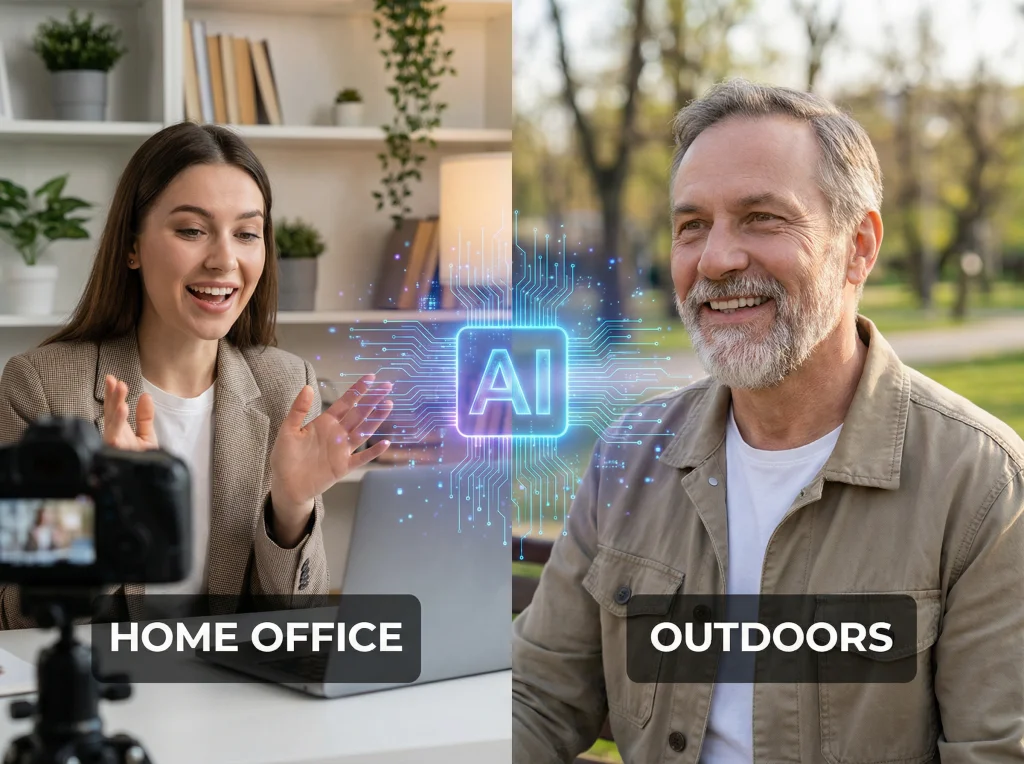
Don't create all videos with the same background or framing. Generate some videos in home settings, some in professional offices, some outdoors. Vary between closeups and wider shots. This variation mirrors how real UGC looks across different creators and platforms.
Incorporate Subtle Imperfections
Perfectly polished videos can feel inauthentic. Some of the most effective AI UGC videos include subtle elements that feel more human:
- Natural, imperfect lighting rather than professional studio lighting
- Casual clothing and hairstyles rather than formal attire
- Backgrounds that look like real homes or offices
- Genuine-looking emotions and expressions
Test and Iterate Rapidly
The advantage of AI UGC is speed. Use it to your advantage. Create 5-10 variations with different scripts, personas, or approaches. Test each with a small budget. Identify what resonates with your specific audience, then double down on winning variations while continuing to generate fresh content.

The Ethical and Transparent Approach
As with all AI-generated content, transparency matters. While AI UGC videos can look incredibly authentic, brands should consider disclosure practices:
- Regulatory compliance: Understand FTC guidelines around AI-generated testimonials in your jurisdiction
- Platform policies: Check that social media platforms allow AI-generated UGC content (most do, but policies evolve)
- Brand reputation: Consider whether disclosing AI generation could impact trust with your audience
- Audience expectations: Test how your specific audience responds to AI content
Many brands find success by not explicitly calling out AI generation while maintaining honest, authentic messaging in the video content itself. Others are transparent about using AI as a tool to scale authentic testimonials. The key is ensuring the testimonials and claims made in videos are truthful and represent real benefits customers experience.
Integrating AI UGC with Your Content Strategy
AI UGC videos work best as part of a comprehensive content strategy:
Combine with Real Customer Content
The most successful brands use both real customer testimonials and AI-generated UGC. Real customers provide ultimate authenticity and credibility. AI UGC provides scale and covers gaps where real testimonials don't exist. Together, they create a powerful social proof engine.
Use Across Multiple Channels
AI-generated UGC videos perform well across:
- Paid social: Facebook, Instagram, TikTok, and LinkedIn ads
- Organic social: As filler content and engagement boosters
- Email marketing: Embedded in email campaigns and automation sequences
- Landing pages: As testimonial sections and conversion boosters
- Product pages: Replacing traditional product descriptions with authentic-feeling testimonials
Measure and Optimize
Track performance metrics for AI UGC videos just like any content:
- View-through rate and completion rate
- Click-through rate and conversion rate
- Cost per acquisition compared to other content types
- Audience engagement and retention
Use these metrics to identify top-performing videos and double down on similar messaging, personas, or formats.
Conclusion: The Future of Authentic Content at Scale
AI-generated UGC videos represent a fundamental shift in how brands can create authentic content at scale. By reducing production costs by 95% and timelines by 90%, AI UGC democratizes social proof creation for brands of all sizes. What was once the domain of large enterprises with massive budgets—producing dozens of polished testimonials—is now accessible to solopreneurs and small businesses.
The brands winning with this technology aren't replacing authenticity with AI—they're using AI as a tool to amplify authentic messaging. They're creating testimonials that represent real customer benefits, addressing genuine pain points, and building trust with audiences who see themselves reflected in diverse personas and relatable stories.
As you plan your content strategy for 2025 and beyond, consider how AI UGC videos could accelerate your growth. The combination of authentic messaging, diverse representation, and unprecedented scale creates a powerful competitive advantage.
Ready to explore how AI can transform your content creation process? Try Photo AI Studio's professional video generation tools and discover how to create authentic, high-converting UGC videos at scale. Our platform makes it easy to generate diverse, authentic-looking testimonial videos that build trust and drive conversions.


