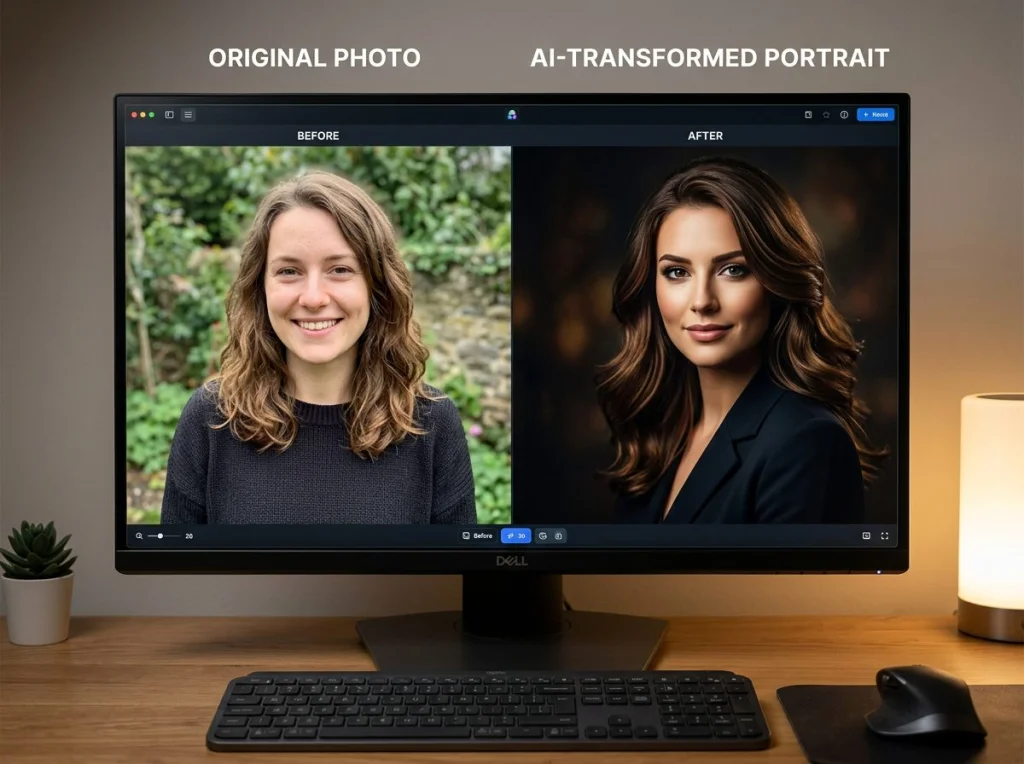

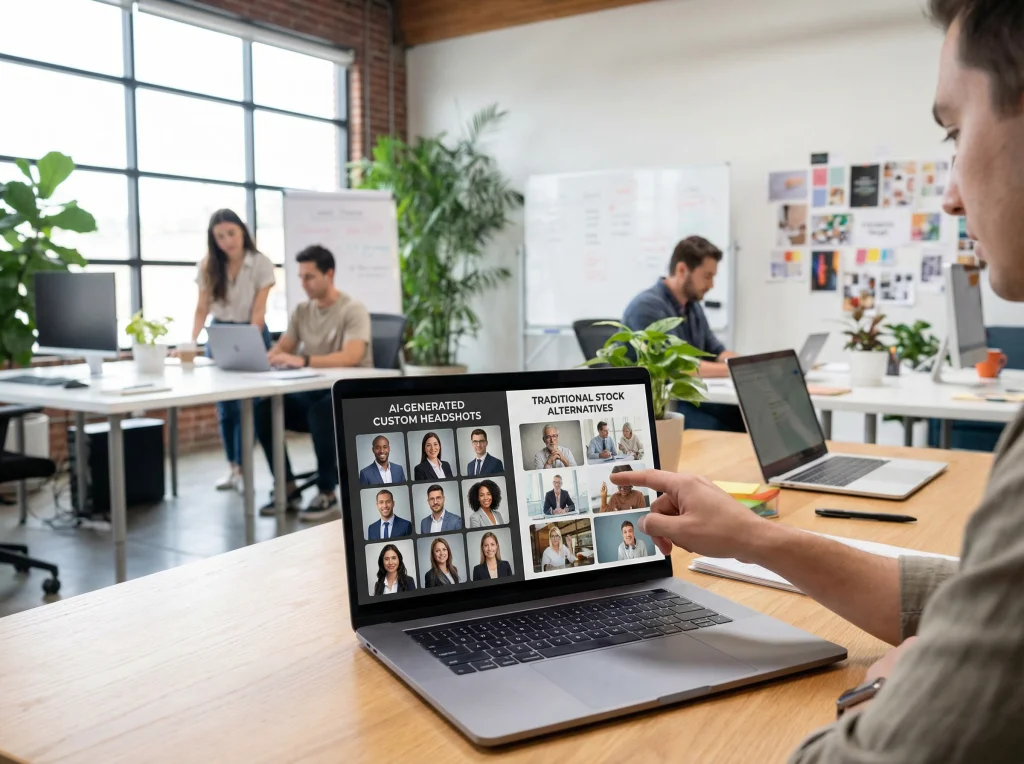
If your brand's social media feeds look suspiciously similar to your competitors', you're not alone. The rise of stock photography has created a visual sameness crisis—where businesses across industries use the same generic images, diluting brand identity and trust. In 2026, a growing number of companies are making a strategic shift toward AI-generated custom photography, and the reasons go far beyond just aesthetics.
The numbers tell a compelling story. Traditional stock photo subscriptions cost between $200-$800 annually, yet deliver limited exclusivity and outdated imagery cycles. Meanwhile, AI photography platforms are transforming how brands create visual content—delivering custom, on-brand imagery in minutes rather than days, at a fraction of the cost. Let's explore why this shift is reshaping the industry.
The Stock Photography Problem: Why One-Size-Fits-All No Longer Works
Stock photography solved a real problem when it emerged in the early 2000s. Before Getty Images and Shutterstock, businesses had limited options for professional imagery without hiring expensive photographers. But familiarity breeds contempt, and today's stock photos have become a liability rather than an asset.
Consider this scenario: A SaaS startup launches its new landing page with a professional headshot from a stock library. Three weeks later, a competitor uses the exact same image. Then another startup does the same. Your audience has seen this face dozens of times across different brands, eroding trust and making your company feel generic.
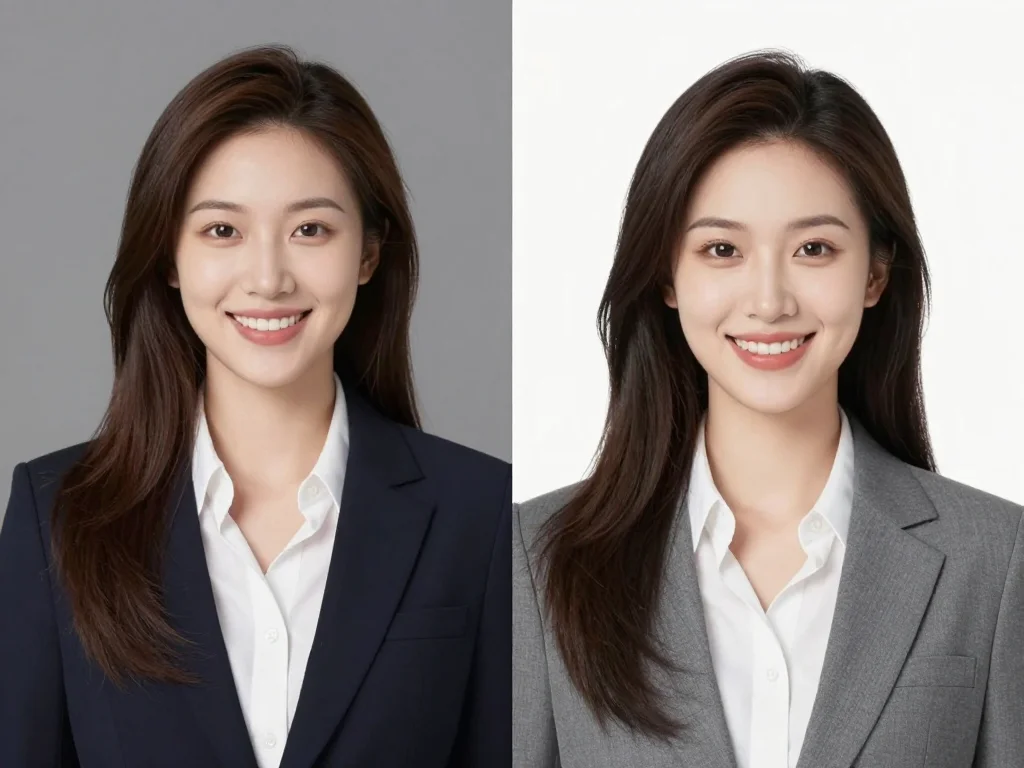
This phenomenon—call it the "stock photo syndrome"—affects more than just aesthetic appeal. Studies show that audiences are increasingly skeptical of obviously staged or overused imagery. Brand differentiation now requires visual content that feels authentic, exclusive, and distinctly yours.
The Cost Comparison: Why AI-Generated Photography Delivers Better ROI
Let's break down the real numbers behind each approach:
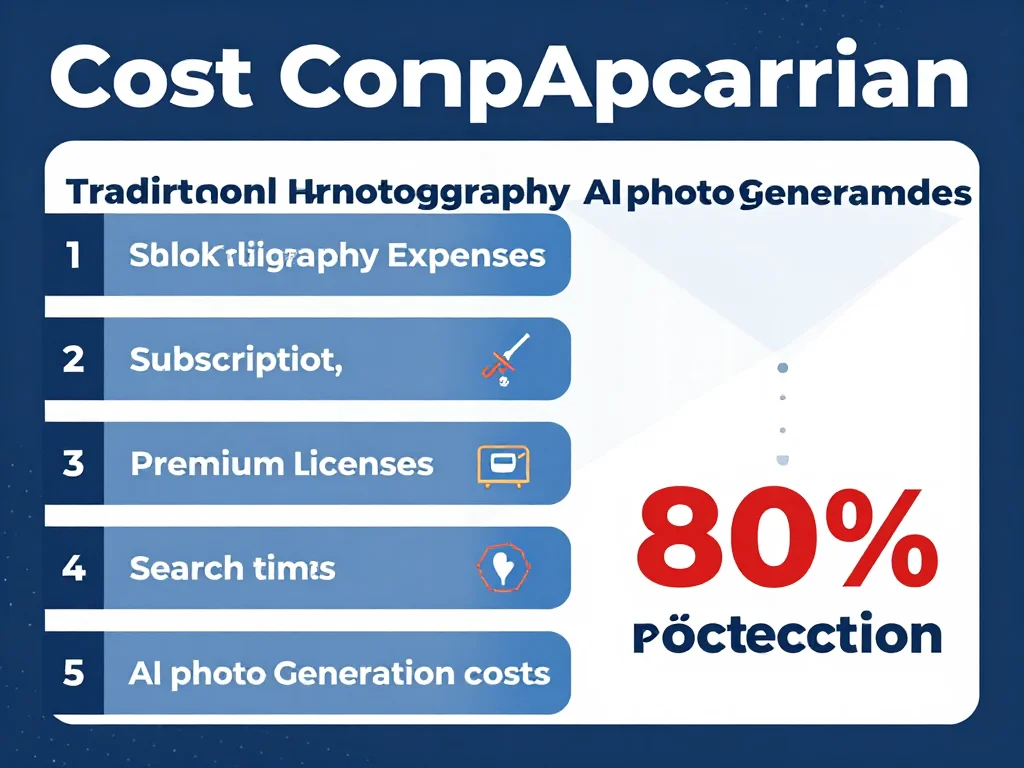
Traditional Stock Photography Costs
- Annual subscription: $200-$800 (depending on download limits and image quality)
- Premium images: $10-$50 per image for exclusive rights
- Image licensing: Additional fees for commercial use variations
- Hidden costs: Time spent searching, editing, and resizing images
- Recurring fees: Ongoing subscriptions even when not actively using images
AI-Generated Custom Photography Costs
- Monthly subscription: $29-$99 (with unlimited image generation)
- Cost per image: Effectively $0.10-$0.50 when generating 100+ images
- No licensing complexity: Full commercial rights included
- Zero search time: Generate exactly what you need in seconds
- Unlimited revisions: Regenerate with adjusted prompts at no extra cost
The mathematics are stark. A brand generating 50 custom images monthly through AI photography spends roughly $25-$50 per month, compared to $200-$300 for stock subscriptions plus premium image purchases. Over a year, that's a savings of $1,800-$3,200 while gaining unlimited customization options.
Speed and Exclusivity: The Game-Changing Advantage
Beyond cost, the operational differences between these approaches are revolutionary.
The Stock Photo Timeline
Traditional stock photography follows a predictable workflow: search databases, review hundreds of similar images, select finalists, download, edit for brand consistency, resize for different platforms, and implement. This process typically takes 30-120 minutes per image set.
The AI Photography Timeline
With Photo AI Studio's custom photoshoots, the workflow is: write a specific prompt, generate images, select your favorite, and publish. Total time: 2-5 minutes.
This speed advantage compounds significantly when you consider marketing velocity. A brand launching a seasonal campaign can generate themed product photography, team headshots, and lifestyle imagery within an hour—something that would take weeks through traditional channels.
The exclusivity factor is equally important. When you generate custom images through AI, no other brand can access the exact same photograph. Your competitor can't use your imagery because it doesn't exist in any stock library. This creates genuine visual differentiation that reinforces brand identity.

Solving the "Same Photo" Problem: How Custom Prompts Work
The real innovation lies in how AI-generated custom photography eliminates visual duplication through intelligent prompting.
Instead of choosing between what's available in stock libraries, you describe exactly what you need:
- "Female software engineer, 30s, sitting at desk with three monitors, casual Friday attire, warm natural lighting, modern tech startup office background"
- "Team of four professionals in business casual clothing, diverse ethnicities, collaborative meeting pose, contemporary office space, professional but approachable atmosphere"
- "Male healthcare professional in medical scrubs, clipboard in hand, confident expression, modern hospital hallway background, trust-conveying composition"
Each of these prompts generates unique images that no other brand can replicate. Your competitors can't search for the same image because it doesn't exist as a commodity. This fundamentally changes the economics of brand visual identity.
Customization Features That Matter
Leading AI photography platforms now offer:
- Consistent character generation: Create the same person across multiple images for team branding
- Background customization: Match your actual office, store, or facility aesthetic
- Outfit and styling control: Ensure visual consistency with brand dress codes
- Lighting and mood adjustment: Generate warm, professional, energetic, or approachable vibes on demand
- Batch processing: Create 50+ variations of a scene in one generation cycle
Quality Benchmarking: Where AI Stands in 2026
A legitimate question remains: does AI-generated photography match professional quality?. Check out our AI dating profile photos.
In 2026, the answer is definitively yes—for most business applications. Professional headshots, team photography, product lifestyle images, and marketing materials generated through advanced AI platforms are visually indistinguishable from professionally shot photography for the majority of use cases.
The remaining advantages of hired photographers are narrow: ultra-specialized product photography, complex multi-person staging, or genuine candid documentary work. For standard business photography—the 80% use case—AI generation delivers comparable or superior quality while dramatically reducing costs and timelines.
The Strategic Shift: Why Enterprise Brands Are Making the Switch
Forward-thinking companies aren't viewing AI photography as a compromise. They're recognizing it as a strategic upgrade across multiple dimensions:
- Speed to market: Launch campaigns in hours instead of weeks
- Consistency: Maintain visual brand standards across global operations
- Flexibility: Test multiple creative directions without financial risk
- Scalability: Generate unlimited content as your business grows
- Privacy: No external models or identifiable individuals (unless chosen)
By 2026, stock photography will increasingly be viewed as a legacy solution for commodity needs. Brands that have shifted to custom AI-generated imagery will enjoy sustained competitive advantages in visual differentiation and operational efficiency.
Making the Transition: Practical Steps for Your Brand
If you're considering the switch from stock to AI-generated photography, here's how to approach it:
Phase One: Audit Your Current Needs
Identify the specific photography types your brand uses most frequently. Document pain points—generic imagery, slow turnarounds, licensing complications, or creative limitations.
Phase Two: Define Your Visual Brand Language
Develop detailed prompts that capture your brand aesthetic. Include details about clothing, setting, lighting, mood, and composition preferences. This becomes your visual guide for consistent AI generation.
Phase Three: Start with High-Impact Categories
Begin with your most-used photography type: professional headshots for team pages, lifestyle images for marketing, or product photography. Prove ROI before expanding to other categories.
Phase Four: Develop a Prompt Library
Build a collection of tested prompts that reliably generate on-brand imagery. This becomes your content creation engine—a reusable asset that streamlines future photo needs. You can also check out our virtual wedding dress try-on.
Ready to eliminate the stock photo syndrome and gain complete control over your visual brand identity? Try Photo AI Studio's professional AI photoshoots today. Create unlimited custom imagery that's 100% yours, with no licensing complications or generic look-alikes. Start generating on-brand photography in minutes, not weeks.